

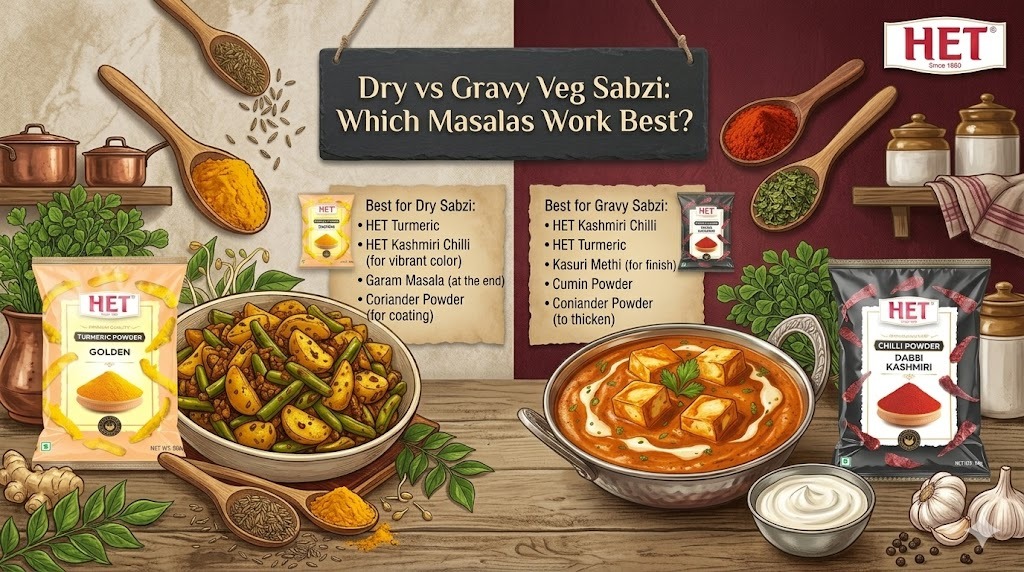
In Indian kitchens, vegetarian cooking beautifully divides into two styles: dry (sukhi) sabzi and gravy (raswali) sabzi. While both use similar ingredients, the way masalas are used makes all the difference.
Understanding how spices behave in each style can instantly improve your everyday cooking—from simple sabzis to rich restaurant-style curries.
Dry sabzis are cooked with minimal water. The spices coat the vegetables instead of forming a gravy.
Examples: Aloo Gobi, Bhindi Masala, Beans Fry
In dry sabzis, spices roast with vegetables to create a flavorful coating.
Gravy sabzis are rich, saucy dishes where spices blend into a base of onion, tomato, cream, or curd.
Examples: Paneer Butter Masala, Mix Veg Curry, Dum Aloo
In gravy dishes, spices dissolve and blend to create a smooth, rich curry.
Low-quality spices can ruin both styles. Dry sabzi may taste dull, and gravy sabzi may lose depth.
Use cumin tadka, add powdered spices, roast well, and finish with garam masala.
Build onion-tomato base, cook spices thoroughly, add cream, and finish with garam masala.
The key to mastering veg cooking lies in understanding how masalas behave in different styles.
Dry sabzi needs spices that coat and roast, while gravy sabzi needs spices that blend and build depth.
Use the right approach, and even simple dishes can turn into something exceptional.
